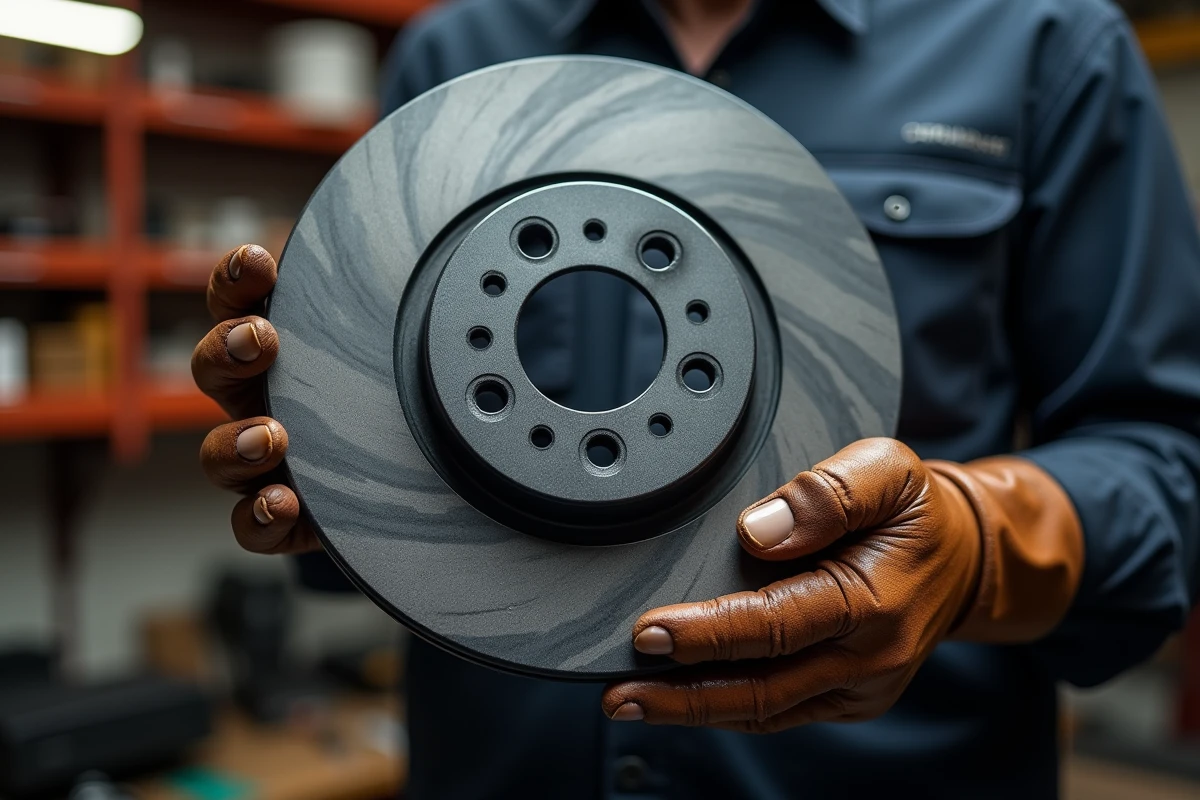
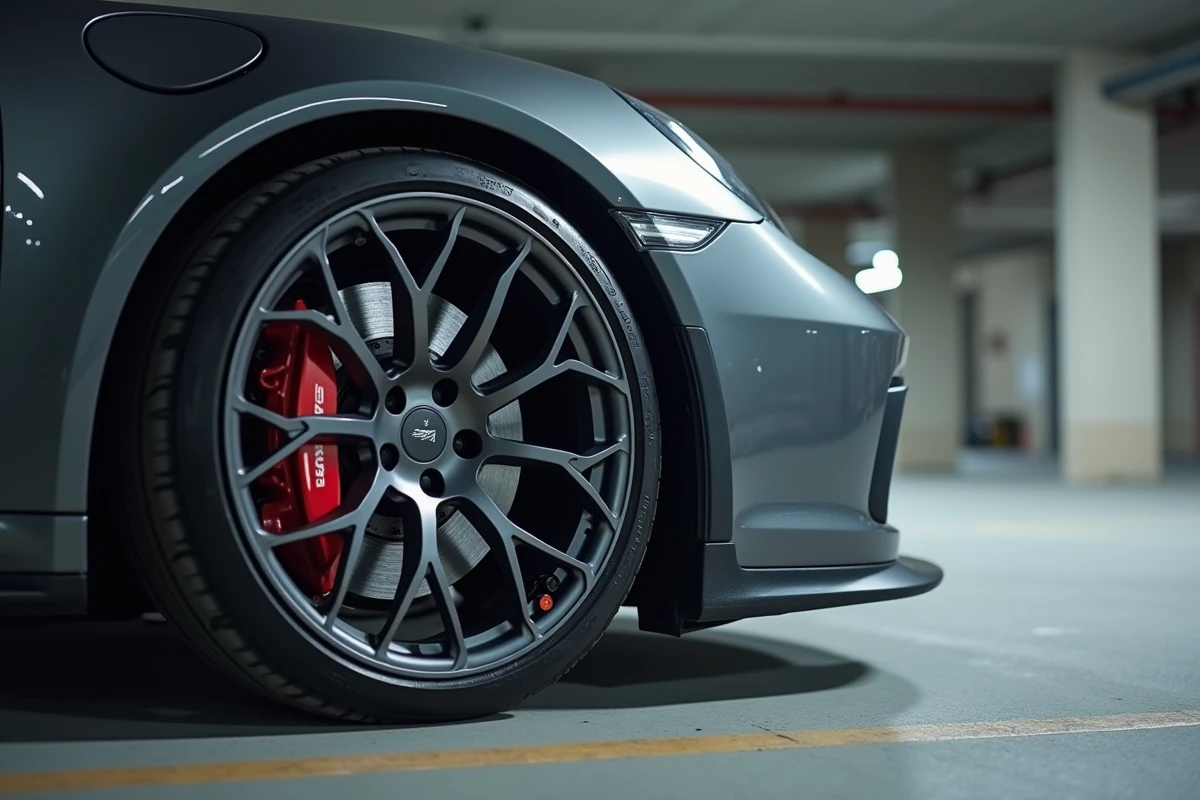
Ceramic brake discs are standard equipment on certain high-end sports cars, such as the Porsche 911, Ferrari, or Audi RS. Their reputation is based on superior thermal resistance and a significant weight reduction compared to steel. However, the question deserves to be asked from a rarely addressed angle: do these discs live up to their promises in real-world road use, far from the circuit conditions for which they were designed?
Glazing and micro-cracking: what open road use reveals
The theoretical lifespan of carbon-ceramic discs is often presented as equivalent to the lifespan of the vehicle. Feedback from owners compiled on the Rennlist forum (threads 2022-2023) and in the long-term tests section of Car and Driver (updated 2023) nuances this claim.
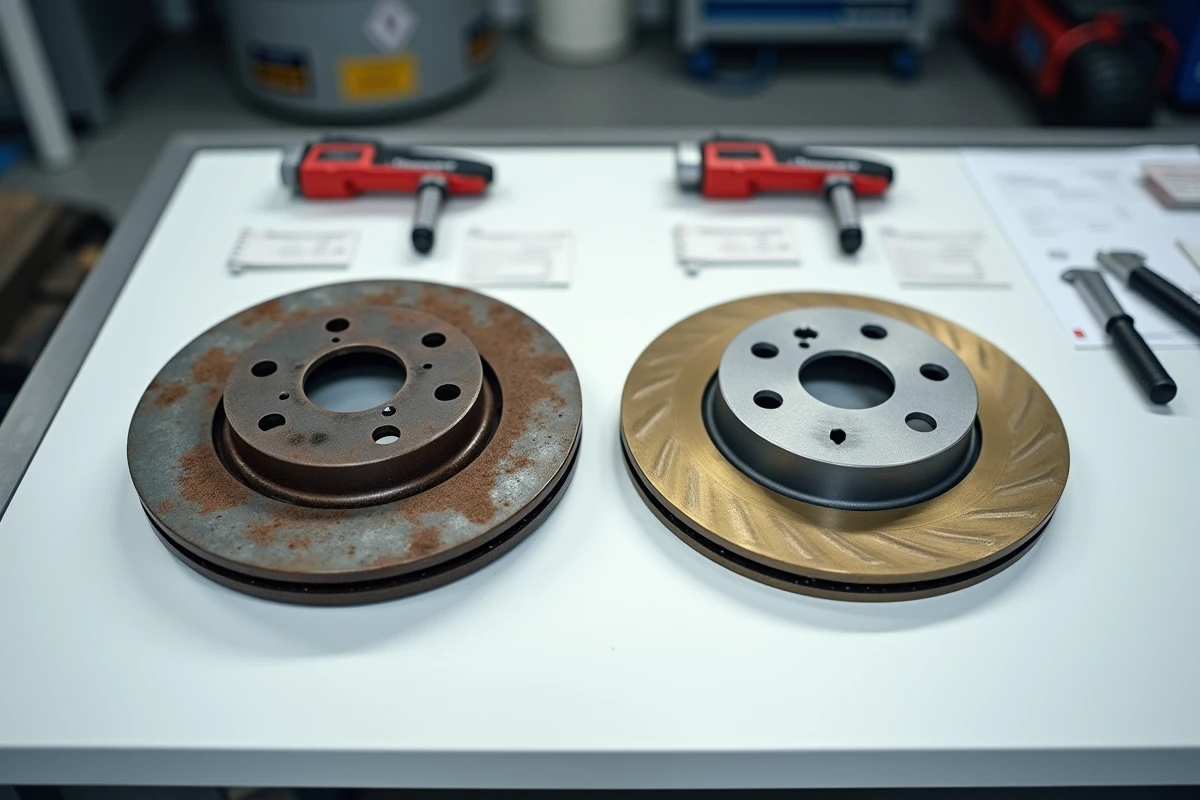
On open roads, with occasional track outings, drivers of Porsche 911 and Audi RS report visible glazing after just a few years of use. This phenomenon occurs when the discs do not regularly reach high enough temperatures to burn off the pad residues, creating a vitrified layer that reduces braking efficiency.
Micro-cracking sometimes accompanies this glazing. Resurfacing, when still possible, represents a high cost. Early replacement, well before the announced end of life, then becomes the only option. Before opting for ceramic brake discs, it is essential to assess whether your driving profile truly demands high-temperature braking.
Carbon-ceramic discs vs. steel discs: comparison table
The comparison between these two technologies depends on specific criteria. The table below summarizes the differences in parameters that matter on a daily basis.
| Kriterium | Carbon-Keramikscheibe | Stahlscheibe (Standard oder hochlegiert) |
|---|---|---|
| Gewicht | Deutlich leichter (reduziert die ungefederte Masse) | Schwerer, Einfluss auf die Reaktivität des Fahrwerks |
| Thermische Beständigkeit | Ausgezeichnet, für Rennstreckentemperaturen konzipiert | In Ordnung im Straßenbetrieb, Risiko des Fadings bei intensiver Nutzung |
| Echte Lebensdauer (Straße) | Variabel, Glanzbildung möglich bei Unterbeanspruchung | Vorhersehbar, progressive und lineare Abnutzung |
| Erneuerungskosten | Sehr hoch (mehrere Tausend Euro pro Satz) | Moderat, Teile weit verbreitet |
| Lärm und Staub | Geringe Staubproduktion, reduzierte Geräusche bei Hitze | Sichtbarerer Staub, Geräusch variiert je nach Belag |
| Rennstreckentauglichkeit | Optimal | Ausreichend mit geeigneten halbmetallischen Belägen |
Das Gewicht stellt den greifbarsten Vorteil im Alltag dar. Durch die Reduzierung der ungefederte Massen verbessern Keramikscheiben die Reaktivität der Lenkung und den Komfort auf schlechten Straßen. Andererseits bleibt der Erneuerungskosten der Hauptbremsfaktor für die Mehrheit der Fahrer.
Aftermarket-Kits aus hochlegiertem Stahl: die aufstrebende Alternative
Die üblichen Inhalte vergleichen Keramik mit Standardstahl. Hersteller von hochwertigen Aftermarket-Kits bieten mittlerweile einen dritten Weg an: Stahlscheiben mit hohem Kohlenstoffgehalt. Diese Scheiben übernehmen einige der thermischen Eigenschaften der Keramik, ohne die Kosten zu tragen.
Diese Neuausrichtung des Aftermarket-Marktes spiegelt eine pragmatische Erkenntnis wider. Für ein Fahrzeug, das hauptsächlich auf der Straße genutzt wird, mit ein oder zwei Tagen auf der Rennstrecke pro Jahr, bietet eine kohlenstoffangereicherte Stahlscheibe in Verbindung mit leistungsstarken Sätteln oft einen rationaleren Kompromiss.
- Die Widerstandsfähigkeit gegen Fading verbessert sich signifikant im Vergleich zu einer klassischen Stahlscheibe, ohne das Niveau der reinen Kohlenstoffkeramik zu erreichen
- Die Erneuerungskosten bleiben in einem zugänglichen Bereich, mehrere Male niedriger als die eines Keramikscheibensatzes
- Die Kompatibilität mit gängigen halbmetallischen Belägen vereinfacht die Wartung und erweitert die Auswahl an Teilen
Dieses mittlere Segment erklärt teilweise, warum einige Hersteller ihre Strategie überdenken. Die BMW M GmbH hat ihre Produktdokumentation für die M3/M4 LCI im März 2024 angepasst, und die Mercedes-Benz AG hat im September 2023 über Updates der AMG-Reihe kommuniziert und dabei Kundenrückmeldungen zu Erneuerungskosten und täglichem Komfort als Entscheidungsfaktoren erwähnt.
Driving profile and choice of braking system: the decisive criteria
The choice between ceramic and steel is not just a question of budget. It depends on the frequency and intensity of thermal demands placed on the braking system.
A vehicle that primarily drives in the city or on the highway never brings its discs to temperatures justifying carbon-ceramic. In this case, the risk of glazing outweighs the benefit of thermal resistance. The driver pays a premium for a capability that is not utilized, while exposing themselves to premature degradation due to lack of demand.
Conversely, regular use on the track or in the mountains on winding roads with elevation changes changes the game. Ceramic discs then express their full potential: stable braking after several laps, absence of fading, reduced fatigue on the calipers.
- Predominantly urban and road use: standard steel discs or high-carbon steel, combined with ceramic or semi-metallic pads to reduce noise
- Mixed use with occasional track outings: high-carbon steel discs with high-performance semi-metallic pads
- Frequent track use or competition: carbon-ceramic discs fully justified
The choice of pads is as important as that of the disc. Ceramic pads on a steel disc offer a good compromise between quiet operation and low dust production. Semi-metallic pads on a carbon-ceramic disc maximize performance at high temperatures but generate more dust on the rims.
The key data that summarizes the question remains the gap between replacement costs and the actual level of demand. For the vast majority of cars used on the road, a well-sized steel braking system, with suitable pads, meets the specifications without compromising safety. Carbon-ceramic remains relevant for specific use, and it is in this use that it justifies its investment.