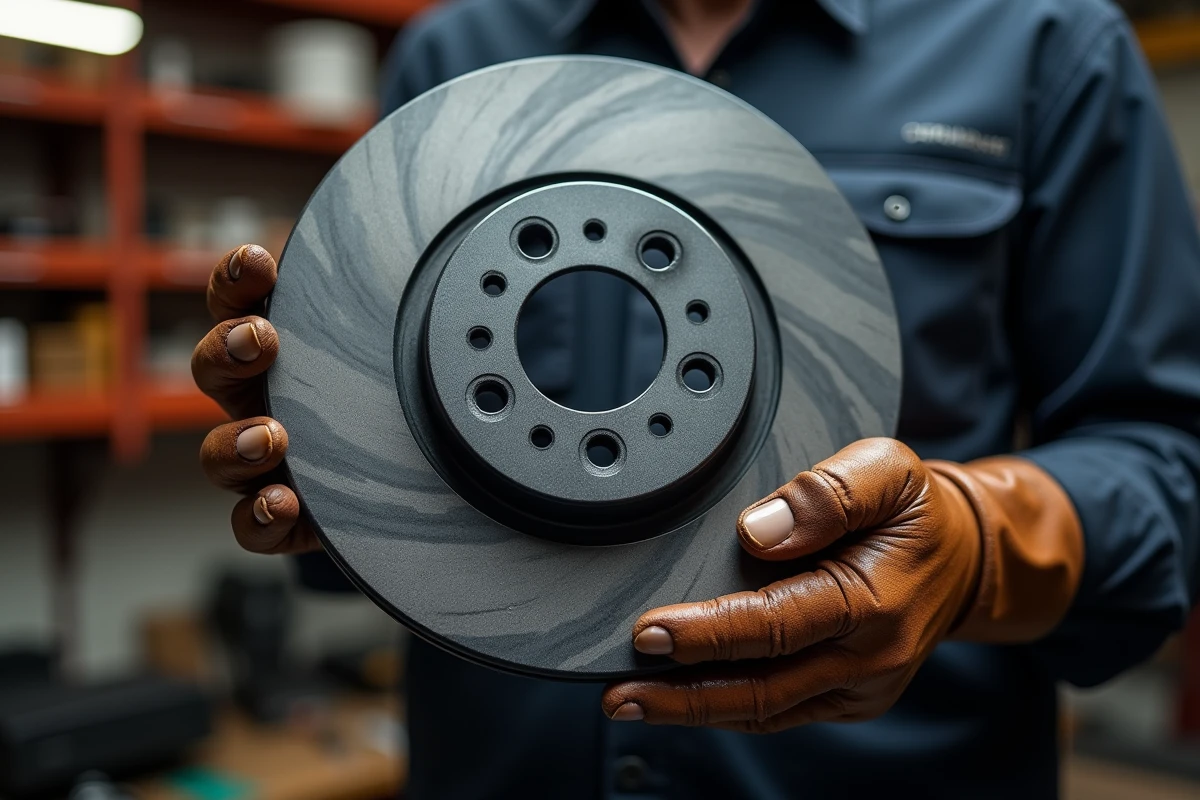
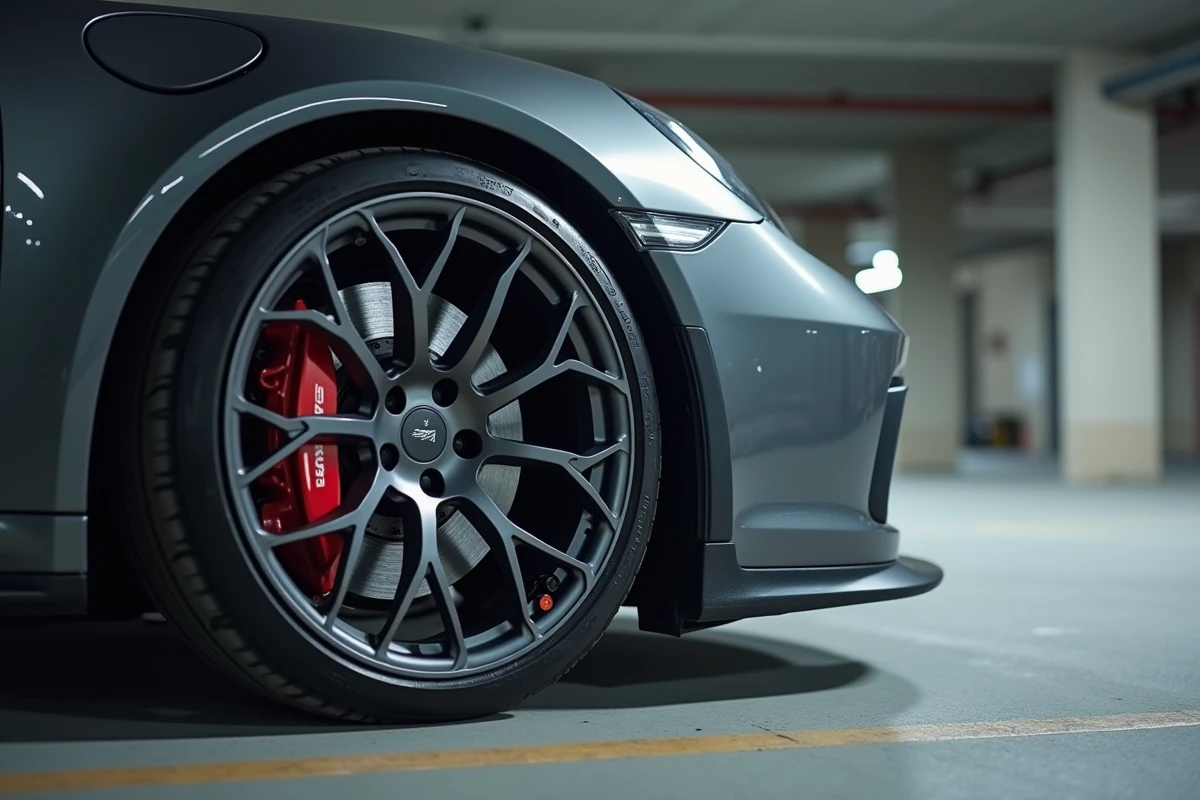
Ceramic brake discs are standard on some high-end sports cars, such as the Porsche 911, Ferrari, or Audi RS. Their reputation is based on superior thermal resistance and a significant weight reduction compared to steel. However, the question deserves to be asked from a rarely addressed angle: do these discs live up to their promises in real-world road use, far from the track conditions for which they were designed?
Glazing and micro-cracking: what open road use reveals
The theoretical lifespan of carbon-ceramic discs is often presented as equivalent to the vehicle’s lifespan. Feedback from owners compiled on the Rennlist forum (threads 2022-2023) and in the long-term tests section of Car and Driver (updated 2023) nuances this claim.
On open roads, with occasional track outings, drivers of Porsche 911s and Audi RS cars report visible glazing after just a few years of use. This phenomenon occurs when the discs do not reach temperature regularly enough to burn off the pad residues, creating a vitrified layer that reduces braking efficiency.
Micro-cracking sometimes accompanies this glazing. Resurfacing, when still possible, represents a high cost. Early replacement, well before the announced end of life, then becomes the only option. Before opting for ceramic brake discs, it is necessary to assess whether your driving profile truly demands high-temperature braking.
Carbon-ceramic discs vs steel discs: comparative table
The comparison between these two technologies depends on specific criteria. The table below summarizes the differences in parameters that matter on a daily basis.
| Criterion | Carbon-ceramic disc | Steel disc (standard or high carbon content) |
|---|---|---|
| Weight | Significantly lighter (reduces unsprung masses) | Heavier, impacts chassis responsiveness |
| Thermal resistance | Excellent, designed for track temperatures | Acceptable for road use, risk of fading under intensive use |
| Real lifespan (road) | Variable, glazing possible if underutilized | Predictable, progressive and linear wear |
| Replacement cost | Very high (several thousand euros per set) | Moderate, widely available parts |
| Noise and dust | Low dust production, reduced noise when hot | More visible dust, noise varies depending on the pad |
| Track relevance | Optimal | Sufficient with suitable semi-metallic pads |
The weight reduction is the most tangible advantage in daily use. By lightening unsprung masses, ceramic discs improve steering responsiveness and comfort on degraded roads. However, the replacement cost remains the main barrier to adoption for most drivers.
Aftermarket high carbon steel kits: the rising alternative
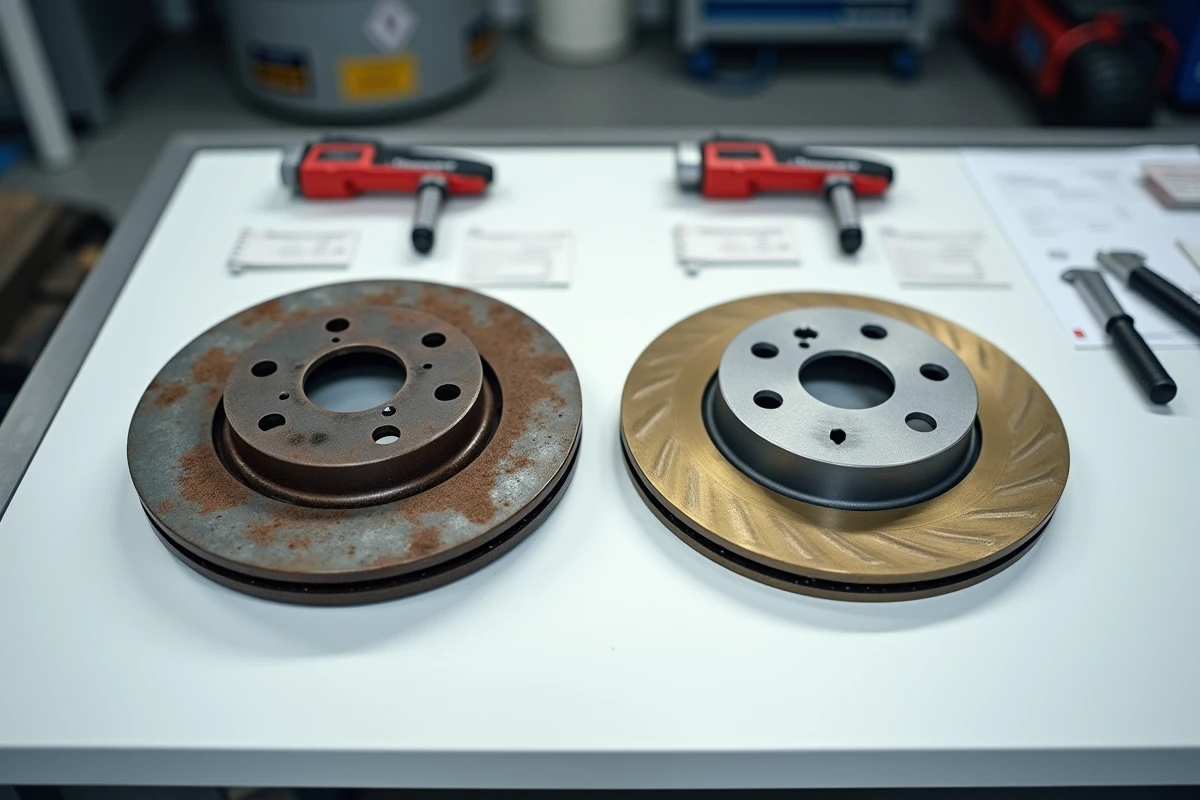
Typical content compares ceramic to standard steel. High-end aftermarket kit manufacturers now offer a third option: high carbon steel discs. These discs retain some of the thermal properties of ceramic without bearing the cost.
This market reorientation reflects a pragmatic observation. For a vehicle primarily used on the road, with one or two track days per year, a carbon-enriched steel disc paired with high-performance calipers offers a more rational compromise.
- Fading resistance improves significantly compared to a standard steel disc, without reaching the level of pure carbon-ceramic
- Replacement cost remains within an accessible range, several times lower than that of a set of ceramic discs
- Compatibility with common semi-metallic pads simplifies maintenance and broadens parts choice
This intermediate segment partly explains why some manufacturers are revising their strategy. BMW M GmbH adjusted its product documentation for the M3/M4 LCI in March 2024, and Mercedes-Benz AG communicated in September 2023 about updates to the AMG range, mentioning customer feedback on replacement costs and daily comfort as decision factors.
Driving profile and brake system choice: the decisive criteria
The choice between ceramic and steel is not just a budget question. It depends on the frequency and intensity of thermal demands placed on the braking system.
A vehicle that primarily drives in the city or on the highway never brings its discs to temperatures justifying carbon-ceramic. In this case, the risk of glazing outweighs the benefit of thermal resistance. The driver pays a premium for a capability that is not utilized, while exposing themselves to premature degradation due to lack of use.
Conversely, regular use on the track or in the mountains on winding roads with elevation changes changes the game. Ceramic discs then express their full potential: stable braking after several laps, no fading, reduced fatigue on the calipers.
- Predominantly urban and road use: standard steel or high carbon steel discs, paired with ceramic or semi-metallic pads to reduce noise
- Mixed use with occasional track outings: high carbon steel discs with high-performance semi-metallic pads
- Frequent track use or competition: carbon-ceramic discs fully justified
The choice of pads is as important as that of the disc. Ceramic pads on a steel disc offer a good compromise between quiet operation and low dust production. Semi-metallic pads on a carbon-ceramic disc maximize performance at high temperatures but generate more dust on the wheels.
The key data summarizing the issue remains the gap between replacement cost and the actual level of demand. For the vast majority of cars used on the road, a well-sized steel braking system, with suitable pads, meets the requirements without compromising safety. Carbon-ceramic remains relevant for specific use, and it is in this use that it justifies its investment.