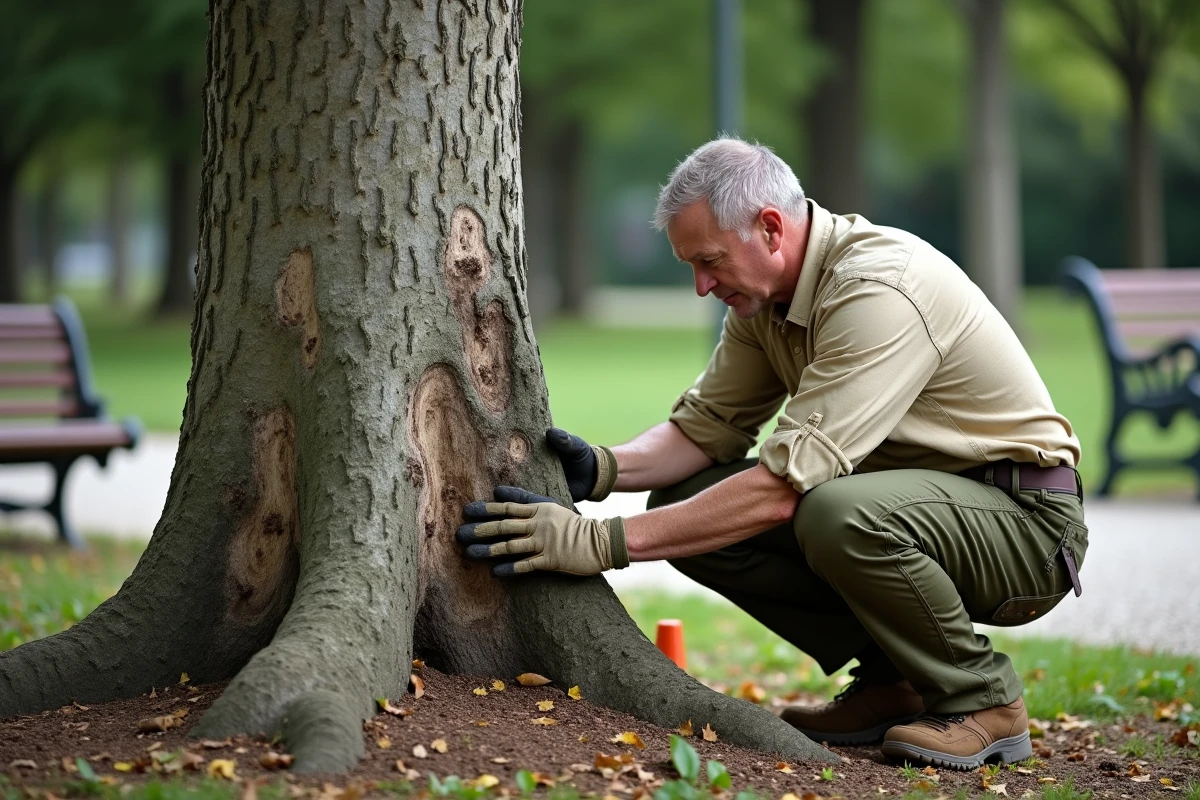
The plane tree mulberry (Morus kagayamae) faces very different types of attacks depending on whether they are fungal, parasitic, or regulatory. Identifying the exact nature of the problem determines the treatment and, sometimes, the legal survival of the tree. Comparing the main threats allows for prioritizing interventions instead of multiplying unnecessary sprays.
Fungal diseases, pests, and quarantine: comparative table of threats to the plane tree mulberry
Symptoms often overlap (falling leaves, necrotic branches, sap flow), but the causes and responses diverge radically. The table below contrasts the three most common categories of problems.
| Threat | Type | Visible Symptoms | Treatment | Regulatory Constraint |
|---|---|---|---|---|
| Gummosis / canker | Fungus (fungal) | Sap flow on the trunk, open wound, necrosis of the bark | Scraping the wound, disinfection with copper or iron sulfate, healing paste | No legal obligation |
| Mulberry scale | Sucking insect | White clusters on twigs and leaves, black sooty mold, general weakening | Insecticide treatment or white oil at the end of winter | No legal obligation |
| Plane tree tiger | Sucking insect | Silver discoloration of leaves, small black spots on the underside | Release of lacewings (biological control) or targeted insecticide | No legal obligation, but municipal monitoring in certain municipalities |
| Tiger longhorn beetle (Anoplophora chinensis) | Wood-boring beetle – quarantine organism | Circular holes in the wood, sawdust at the base, rapid decline | Mandatory destruction of the tree within a defined perimeter | Legal obligation for destruction (prefectural orders in Gironde, Hérault, Var) |
The distinction between a treatable fungal problem in the garden and a quarantine organism that requires felling completely changes the strategy. Before any treatment, the wood must be examined, not just the leaves.
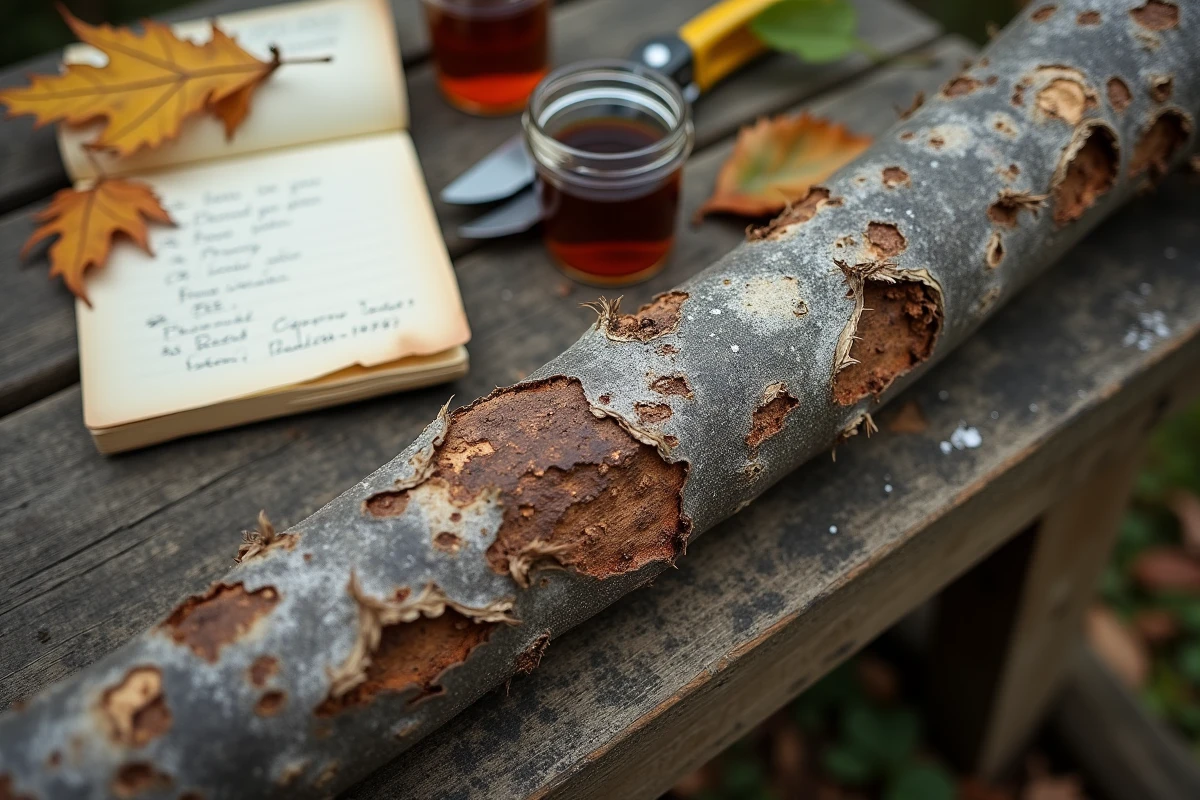
Knowing how to combat diseases of the plane tree mulberry first requires distinguishing between benign gummosis and an infestation by the tiger longhorn beetle, as the administrative consequences are incomparable.
Gummosis and fungal canker of the plane tree mulberry: three-step care protocol
Sap flow (gummosis) remains the most common problem on plane tree mulberries established for a few years. A fungus enters through a wound in the bark, often caused by poorly executed pruning or mechanical shock, and colonizes the internal tissues.
Clean, disinfect, seal
The protocol described by horticultural specialists consists of three steps:
- Scrape the wound down to healthy wood by removing all necrotic bark to expose the entry point of the fungus
- Apply a disinfectant based on copper salts (Bordeaux mixture) or iron sulfate to the exposed surface
- Seal the opening with a commercial healing paste to prevent further colonization
This treatment works on localized cankers. However, if gummosis appears on several branches simultaneously, the tree is likely weakened by a systemic factor (compacted soil, excess watering, deficiency) and simple scraping will not be sufficient.
Limit copper in the garden soil
The Bordeaux mixture is the historical reflex against fungal diseases. In recent years, gardening guides have recommended reserving copper treatments for specific cases due to copper accumulation in soils. On a plane tree mulberry treated each season, the soil at the base of the tree eventually concentrates copper levels that disrupt microbial life.
Documented alternatives include spraying baking soda on the foliage, horsetail decoctions, and diluted milk. These solutions are suitable for mild foliar diseases. For a deep canker on the trunk, copper or iron sulfate remains more appropriate, but applied locally rather than as a general spray.
Plane tree tiger and scale: two pests not to be confused
Leaves that discolor or fall prematurely often lead to a default fungal diagnosis. In many cases, the culprit is an insect.
The mulberry scale is identified by cottony white clusters on twigs and the underside of leaves. It causes gradual weakening and promotes the appearance of sooty mold (black deposits on the foliage). A treatment with white oil at the end of winter, before bud break, suffocates the overwintering larvae.
The plane tree tiger causes a characteristic silver discoloration on the upper side of the leaves, with small black punctuations underneath. Some municipalities in southern France have tested releases of lacewings on the foliage as a biological alternative to insecticides, with positive results on reducing visual damage and preserving beneficial insects.
In contrast, a broad-spectrum insecticide treatment on a plane tree mulberry also eliminates the natural predators of the tiger, which encourages more aggressive recolonizations the following season.
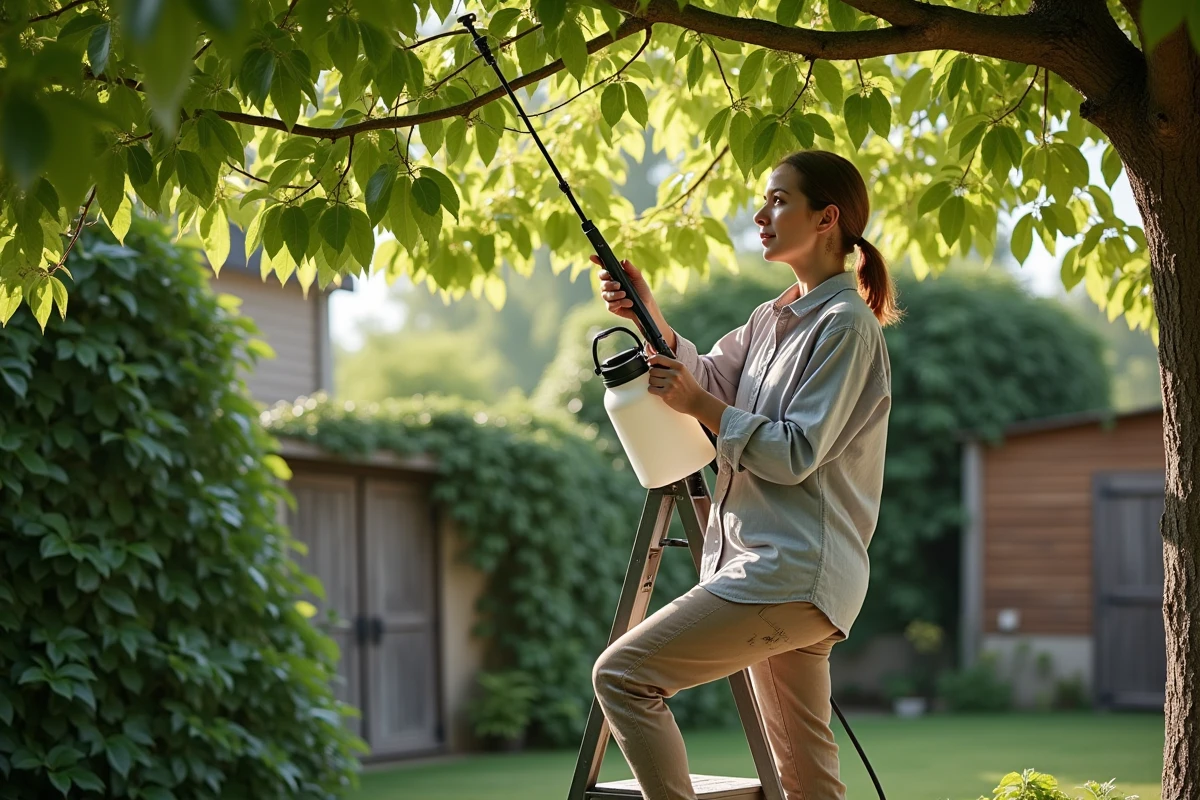
Tiger longhorn beetle on plane tree mulberry: obligation of destruction and regulatory perimeter
The tiger longhorn beetle (Anoplophora chinensis) represents a special case. Classified as a quarantine organism to be eradicated, it is subject to prefectural orders in several departments (Gironde, Hérault, Var). An infested plane tree mulberry cannot be treated: it must be felled and destroyed, with monitoring of the surrounding perimeter for several years.
Warning signs include circular holes in the wood of the trunk or main branches, fine sawdust at the base of the tree, and rapid decline of entire branches. These symptoms are not to be confused with classic gummosis, but an uninformed owner may mistakenly attribute them to a fungus and lose valuable time.
In case of doubt, reporting to the town hall or the FREDON (Regional Federation for the Defense Against Harmful Organisms) in your department triggers an inspection. Failing to report an outbreak exposes you to penalties, as the regulations require declaration.
Prevention through pruning and soil health
The majority of fungal infections in plane tree mulberries start from a pruning wound. Using a disinfected tool, cutting at an angle to promote water runoff, and avoiding cuts in mid-winter (when fungi sporulate) significantly reduces the risk of pathogen entry.
A living, uncompacted soil, with organic mulch at the base of the tree, maintains a root system capable of withstanding stress. Plane tree mulberries planted in urban environments, with compacted and impermeable soil, develop more pathologies than those planted in open ground in an airy garden.
The choice between curative treatment and cultural prevention depends on the initial diagnosis. A tree that shows localized gummosis after clumsy pruning can be treated in a few weeks. A tree attacked by the tiger longhorn beetle leaves no room for maneuver. The whole difference lies in examining the wood before the leaves.