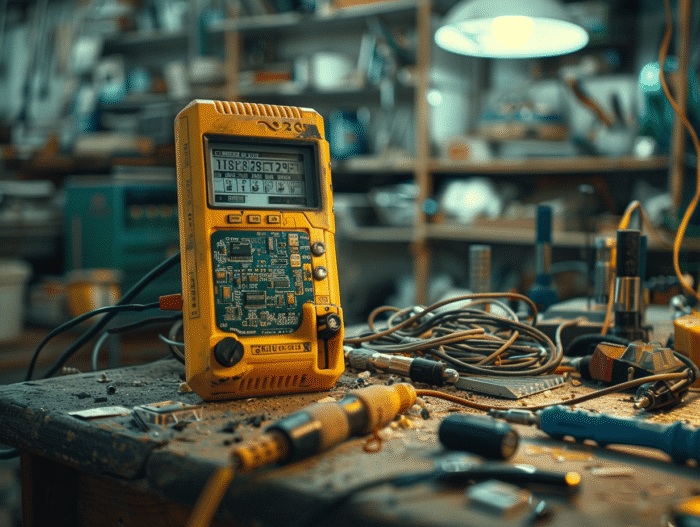
In the world of DIY and home repair, the ability to handle electrical problems is an invaluable skill. For DIY enthusiasts and homeowners keen on maintaining their homes, understanding how electricity works and knowing how to use the right tools is fundamental. An essential tool for any repair hobbyist is the multimeter, a device that measures various electrical quantities. Mastering it can transform a novice into a skilled repairer, capable of identifying and solving simple electrical issues, thus ensuring safety and efficiency while maintaining their home.
The Basics of Using a Multimeter at Home
The multimeter, whether digital or analog, is the ultimate versatile instrument for anyone looking to master the basics of electricity and carry out home repairs. Its design allows it to measure current, voltage, and resistance, making it a valuable tool for diagnosing malfunctions in various devices or electrical circuits. Digital multimeters, with their auto-ranging capability, offer increased accuracy, making them the preferred choice for reliable and precise measurements.
For proper use, connect the multimeter leads correctly: the black lead in the COM port and the red lead in the port designated for the relevant measurement unit, whether it be voltage, current, or resistance. Once the probes are correctly positioned, you can proceed to test an electrical device, for example, how to identify the neutral with a multimeter. To do this, place one probe on the ground or earth and the other on the wire to be tested: the multimeter should indicate a voltage close to zero for the neutral.
In a home context, electricity can be as dangerous as it is vital. Therefore, take all necessary precautions before any intervention: turn off the electrical circuit by deactivating the circuit breaker or removing the relevant fuse. Also, ensure that the device or circuit you are working on is not powered, thus minimizing the risk of accidents. The multimeter, beyond its measuring function, also serves as a voltage tester, allowing you to check for the absence of current before starting any repairs.
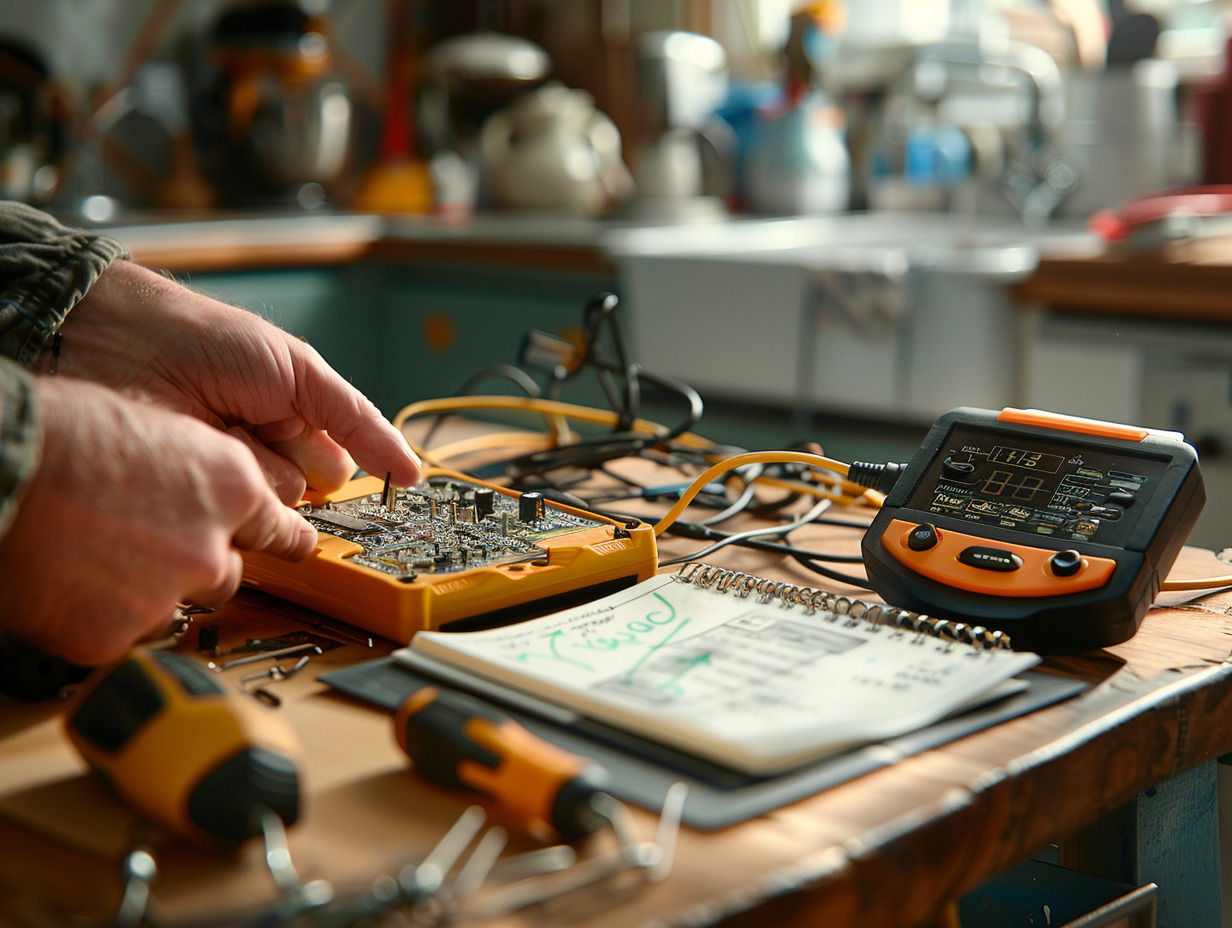
Practical Guide for Domestic Electrical Troubleshooting with a Multimeter
Troubleshooting domestic electrical installations requires in-depth knowledge and the proper use of tools such as the electrical multimeter. This device proves indispensable for identifying anomalies present in circuits or equipment like the Kid’zzz n’ Quad’zzz. When a battery needs to be tested, for example, if it should deliver 12 V when unloaded and 13.1 V when charged, the multimeter, when correctly configured, will confirm these values with assurance and precision.
Ensuring the safety of the electrical installation is a primary concern. Before any intervention on the electrical panel or fuse box, it is imperative to turn off the installation. This seemingly simple action prevents the risks of electrocution and short circuits. Using the red probe for measurements and the screen displaying the results contributes to an immediate and accurate analysis of the installation’s status.
The grounding is a key element of electrical safety. A professional electrician, such as a technician from IZI by EDF, is often called upon to test its compliance. However, with a multimeter, it is possible to perform basic checks. By placing one probe on the ground and the other on a phase, the device should measure a voltage that confirms the proper connection of the ground.
In case of suspected electrical leakage, the multimeter becomes a detective. By measuring the continuity of circuits, the device can help identify the faulty component or the point of failure in the circuit. Safety devices, such as circuit breakers, protect against overloads and short circuits, but it is the wise use of the multimeter that will allow you to pinpoint the source of a fault, thus avoiding the need to always call a professional.