
Dys disorders (dyslexia, dysorthographia, dyspraxia, dyscalculia) affect a significant portion of middle school students, but the responses provided vary greatly from one institution to another. Between institutional frameworks like the PAP or the PPRE and recent digital tools, families struggle to identify what has a measurable impact on their child’s education.
Digital tools versus pedagogical accommodations: what each approach covers
The distinction between a pedagogical accommodation (extra time, reformulation of instructions, adapted font) and a digital tool (text-to-speech, specialized spell checker, text reader) is not always clear for families. Both complement each other but do not address the same needs.
| Criterion | Pedagogical Accommodations | Digital Tools |
|---|---|---|
| Implementation | Requires a PAP or a PPS validated by the educational team | Usable at home without a formal framework |
| Type of targeted disorders | All dys disorders (reading, writing, calculation, motor skills) | Mainly dyslexia and dysorthographia |
| Student’s autonomy | Depends on each teacher in class | The student can use it independently after familiarization |
| Personalization | Variable depending on teachers and coordination | Fine-tuning options (reading speed, font size, background color) |
| Cost for the family | Free (school framework) | Free to paid depending on the software |
A dyslexic student who benefits from a PAP with extra time but has no tools to review their lessons at home finds themselves in an asymmetrical situation. The effectiveness relies on the combination of both approaches, not on choosing one over the other.
To better understand the resources available in middle school, Emploi Annonces resources detail the tools that can be activated based on the student’s profile.
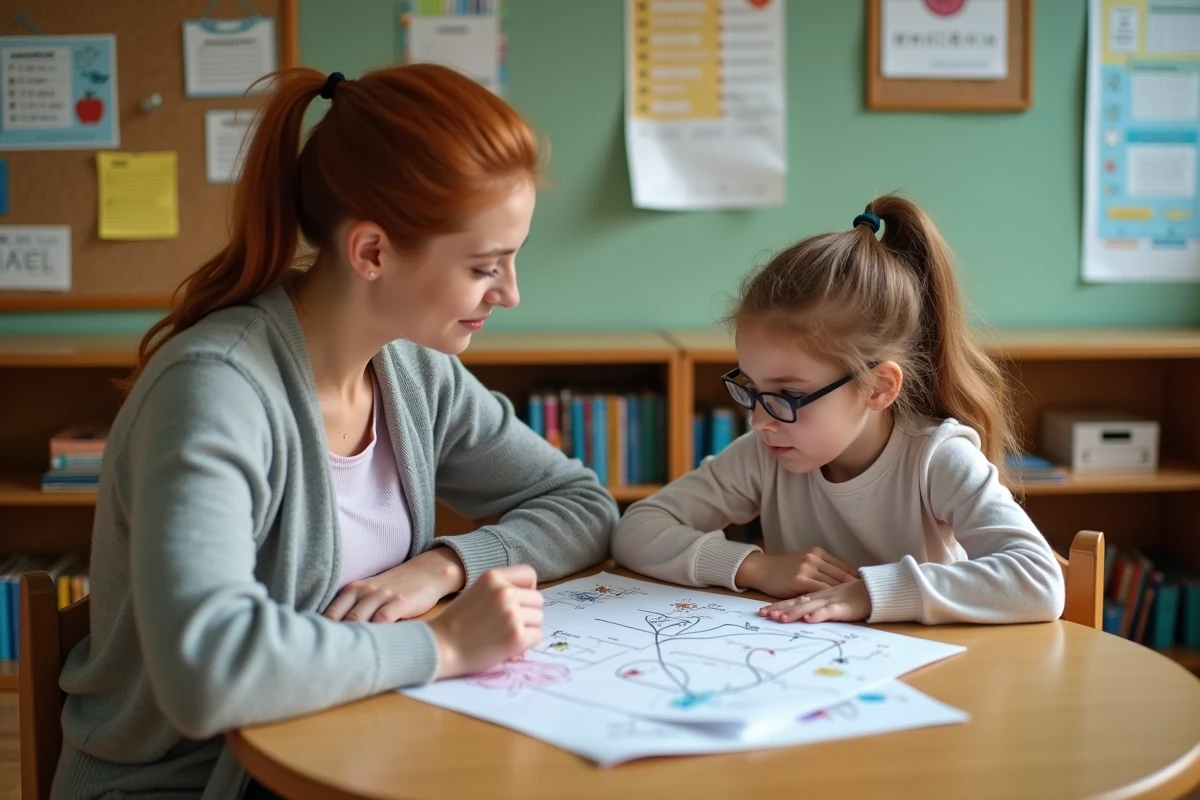
Reducing executive load: concrete tools for dys students in middle school
General content on dys disorders often mentions text-to-speech and extra time. These accommodations are useful, but they do not address a central issue for dys or ADHD middle school students: the overload of executive functions (planning, organization, time management).
Recent publications from educational support professionals highlight a clear trend towards “external compensation” through visual planning tools. Their principle is to relieve the student’s brain of organizational tasks so that they can focus their energy on learning itself.
Visual timers and time management
A visual timer (physical or app) represents the remaining time as a colored area that decreases. For a dyspraxic or ADHD student, this visualization replaces the abstract perception of time with a concrete reference. The effect is twofold: reducing anxiety related to deadlines and better distributing effort during an exercise.
Checklists and homework planners
Daily checklists (on paper or via an app) allow the student to break a complex task into short steps. A dysexecutive middle schooler faced with “review chapter 4 of history” often does not know where to start. Breaking the task into visible sub-steps transforms a vague instruction into a sequence of actions.
- Review the lesson once by highlighting key words (not entire sentences)
- Rephrase each paragraph in one sentence with their own words
- Check their understanding by asking themselves three questions out loud
- Check off each completed step to visualize progress
These tools do not replace speech therapy or a PAP. They fill a gap: what happens between the end of classes and the moment the student opens their notebook at home.
Family-school coordination: the weak point of dys provisions
Recent institutional resources, particularly those from ONISEP, emphasize coordination between family, school, and health professionals more than just a simple list of accommodations. The role of the school doctor in the annual follow-up of the provision is now more explicit.
In practice, this coordination remains the weak link. A PAP written at the beginning of the school year may never be consulted by some teachers. The annual follow-up of the PAP with the school doctor is a right, not an option.
What families can check
- Has the PAP been sent to each teacher, including substitutes?
- Are the planned accommodations (extra time, adapted documents) applied in all subjects?
- Is a follow-up meeting with the homeroom teacher or school doctor scheduled at least once a year?
- Can the student explain their accommodations and request them when they are not applied?
This last point is often overlooked. A dys middle school student entering 8th or 9th grade benefits from being able to articulate their needs to a new teacher. This self-advocacy skill does not come naturally; it needs to be developed with the family and the professionals who support the child.
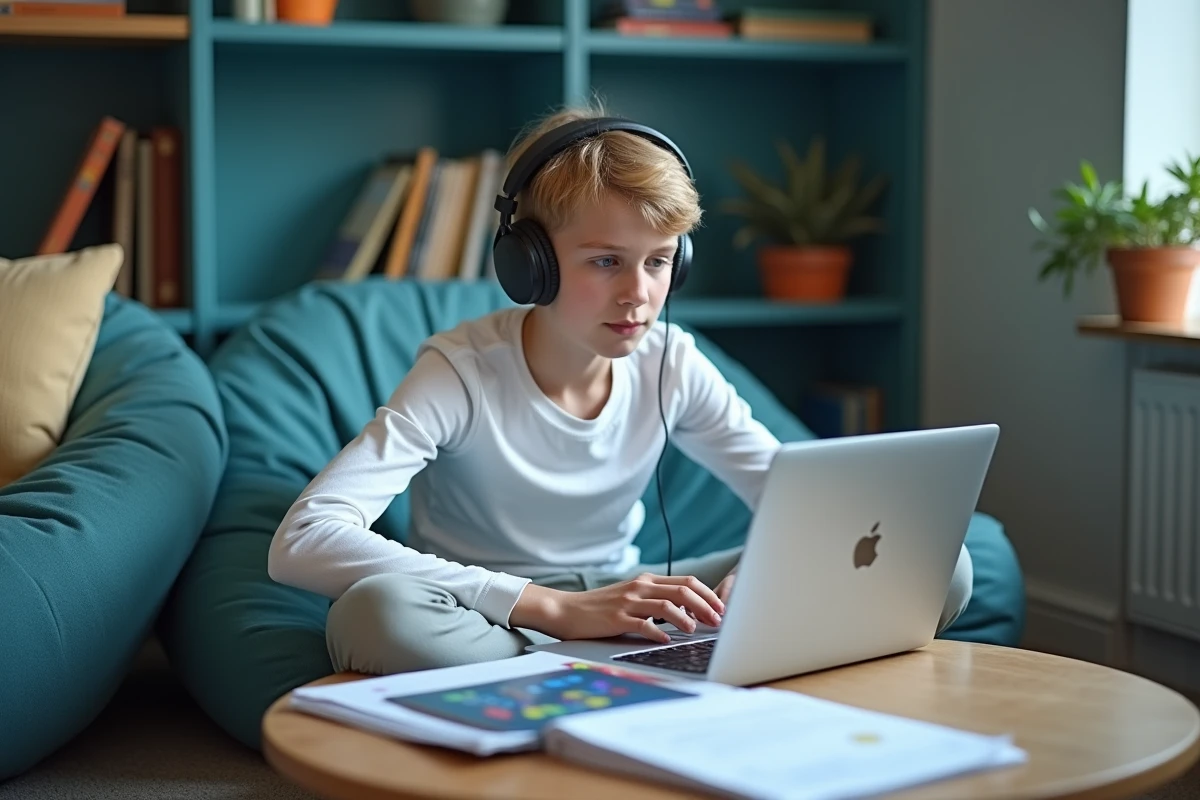
Early detection of dys disorders: game-changing tools in middle school
Late detection remains a frequent problem. Some students arrive in 6th grade without a diagnosis, with difficulties attributed to a lack of work or motivation. Standardized assessments of fluency and reading (such as OURA, ELFE, or ODEDYS tools) are increasingly used in school contexts to objectify these difficulties.
A diagnosis made as early as 5th grade allows entry into middle school with an already operational PAP. Conversely, a student identified only in 7th grade will have lost two years without accommodations, with consequences for self-confidence and academic results.
The strengthening of the use of these detection tools in primary and middle school in 2025 is a step in the right direction. The challenge remains their uniform deployment: not all institutions have the same level of training or resources to conduct these assessments.
The difference between a supported dys middle school student and a struggling dys middle school student rarely lies in the severity of the disorder. It lies in the timeliness of detection, the quality of coordination, and access to the right tools at the right time.